Windows up on the ridge: choosing frames for an exposed house
What Crowborough's height and its open western edge mean for each frame material, and what to ask before you buy.
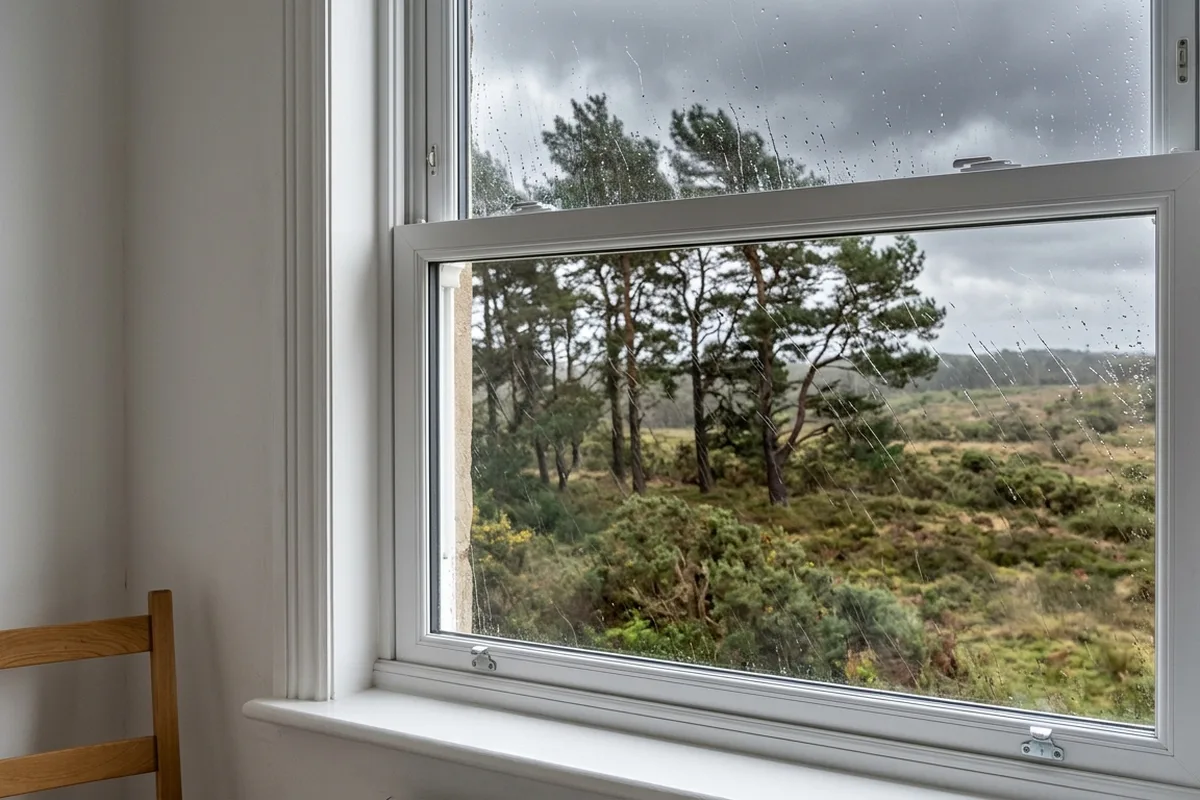
Why Crowborough is different from the towns around it
The highest point in the town is 242 metres above sea level. It is the top of the High Weald and the second highest point in East Sussex, after Ditchling Beacon on the South Downs. In the late nineteenth century the town sold itself as a health resort on exactly that basis: high air, open heath, and forest on the doorstep. Estate agents called it "Scotland in Sussex", and road names such as Aviemore, Rannoch and Melfort still carry the idea.
The same height that sold the houses is what their windows have to cope with. Ashdown Forest lies along the town's western edge, so weather from the west and south-west, the usual direction in southern England, crosses open heathland before it meets the houses. Compare Jarvis Brook, in the valley below Crowborough Hill, or Groombridge down by the River Grom: those houses are sheltered in a way the Warren and Beacon Road are not.
What exposure does to each material
uPVC
uPVC does not rot or need paint, and a good frame with a multi-point lock seals well. Its limit is stiffness across a wide opening. On the big sashes and wide casements of the Edwardian houses, ask how the frame is reinforced. On the regular openings of a 1960s or 1970s house, it is the obvious choice, from £815 a window.
Aluminium
Aluminium is the stiffest of the three, which is why slim aluminium frames can carry large panes without bowing. The powder-coated finish does not need painting. It costs more: a slimline aluminium casement is £1,200 to £1,950 against £1,100 to £1,950 for uPVC flush. On the largest, most exposed houses, it is often money well spent.
Timber
Well-made timber lasts for generations if it is looked after, but looking after it is the issue. Painted timber normally needs repainting every five to eight years, and sooner on west- and south-facing walls in a place like this. Unless planning requires timber, the cost and the upkeep put it behind the other two here. The timber page sets out the numbers.
What to ask before you buy
- Weather performance. The British Standard BS 6375-1 classifies windows for air permeability, watertightness and wind resistance. On an exposed elevation, ask which classes the quoted windows have been tested to.
- Drainage. Rain that gets past the outer seal should drain out of the frame through slots at the bottom. Ask where they are, and keep them clear of pine needles.
- Locking. Multi-point locks pull the opening light against its seals along its whole height, which matters more in a gale than a single latch.
- Ventilation. Building Regulations expect replacement windows to keep background ventilation, normally through trickle vents. Better-sealed windows make this more important, not less.
- Thermal performance. Replacement windows must meet the energy standard in Approved Document L, a U-value of 1.4 or better. Ask for the figure to be shown on the quote.
None of this needs a specialist product. It needs the right frame for each elevation, which is what the survey is for. Ask for one, or call 01892 571 818.